Pumpkin Halloween Guard Redwork
A Sharp, Confident Redwork That Knows Its Role
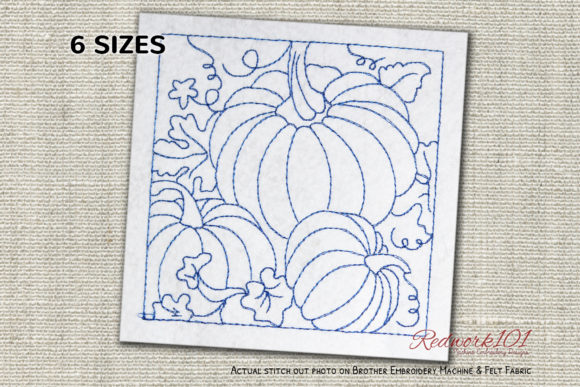
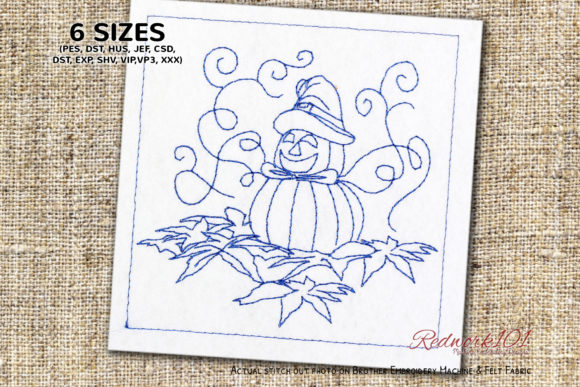
First impression? This isn’t a timid jack-o’-lantern—it’s a bold, graphic guard standing watch. The Pumpkin Halloween Guard Redwork leans into classic redwork’s clean linearity: no heavy fills, no gradients, just confident outlines and intentional negative space. It feels hand-drawn but precise—like something you’d find stitched on a vintage apothecary label or a 1940s Halloween postcard. The pumpkin’s face is expressive without being cartoonish; the stem has weight, the eyes have character, and the overall shape holds up at small scales. It doesn’t try to be cute or spooky—it’s *present*, with quiet authority. That makes it unusually versatile for real-world embroidery use.
Where It Shines: Real Projects, Not Just Mockups
I recently tested Pumpkin Halloween Guard Redwork on a natural linen tea towel for a local boutique’s holiday collection. Hooped with medium-weight cutaway stabilizer and stitched in deep burgundy thread on off-white fabric, it landed exactly as intended: crisp, legible, and warm—not loud, not fussy. Customers responded immediately to its clarity and charm. It worked just as well on a midweight cotton sweatshirt (using tear-away + topping), where the redwork lines stayed sharp despite the fabric’s slight nap. As a patch design, it’s ideal: minimal stitch count means easy peeling, clean edges, and strong adhesion—even on curved surfaces like denim jackets or canvas backpacks.
For Etsy sellers and craft fair vendors, this design fits seamlessly into curated holiday lines: think embroidered baby onesies (paired with soft pastel thread), minimalist aprons for bakeries or coffee shops, or pillow covers styled with modern farmhouse or Scandinavian decor. Because it’s redwork—not dense fill—it breathes on lightweight fabrics like chambray or gauzy cotton, avoiding stiffness or puckering that can ruin a handmade product’s drape. And unlike busier Halloween motifs, Pumpkin Halloween Guard Redwork reads clearly even when scaled down to 3 inches—perfect for cuff embroidery on children’s caps or corner accents on kitchen towels.
Where to Pause—and Why
Redwork looks deceptively simple, but Pumpkin Halloween Guard Redwork demands thoughtful execution on certain substrates. On dark fabric (navy, charcoal, black), contrast depends entirely on your thread choice—test first with your intended colorway. A pale tan or cream thread may disappear unless you add a light stabilizer backing or switch to ecru or antique white. On stretchy knits (like jersey tees), skip direct stitching unless you’re using high-quality adhesive stabilizer and proper hooping tension—those clean lines will distort if the fabric shifts even slightly.
Also note: the outer box stitch shown in previews is optional and stylistically separate. Unless it’s integral to your product’s branding (e.g., a framed boutique logo look), skip it—especially on small items like baby bibs or keychain patches. That extra outline eats hoop space and adds unnecessary density where simplicity is the strength. And on textured fabrics—terry cloth, bouclé, or heavily brushed fleece—the fine lines of Pumpkin Halloween Guard Redwork may blur visually. If using on such surfaces, increase topping or consider a subtle satin border to lift the design.
What It Adds to Your Finished Product—Beyond the Stitch
This isn’t just decoration—it’s a quiet signal of intention. When customers see Pumpkin Halloween Guard Redwork on a handmade tote bag or personalized gift, they register care: the clean lines suggest precision, the redwork tradition implies craftsmanship, and the confident shape conveys seasonal spirit without cliché. For small shop owners, that builds trust. For Etsy sellers, it elevates perceived value—shoppers associate clear, balanced redwork with heirloom quality, not mass production. And because it avoids trendy fonts or overused icons (no bats, ghosts, or “spooky” script), it stays fresh across seasons and appeals to buyers who prefer understated holiday style.
In commercial embroidery settings—say, customizing staff aprons for a fall pop-up café—Pumpkin Halloween Guard Redwork scales reliably across sizes and maintains brand cohesion. It works equally well in monochrome mockups for digital listings and in full-color stitched samples for in-person craft fairs. Its visual personality supports storytelling: a single pumpkin guard becomes part of a larger narrative about warmth, tradition, and handmade care.
Practical Designer Notes Before You Stitch
- Always test on scrap fabric—especially if pairing with textured, dark, or stretchy materials.
- Review stitch density: redwork should feel open and airy. If your machine flags high density or long jump stitches, check the file integrity before committing to a client project.
- Confirm hoop size compatibility: while redwork is forgiving, ensure your largest dimension fits comfortably within your standard hoop—don’t crowd corners.
- Inspect small details: zoom in on eyes, stem tip, and vine ends. Are they cleanly digitized? Do any lines taper too sharply for your needle size?
- Test black-and-white mockups to gauge contrast and silhouette strength—this reveals how well Pumpkin Halloween Guard Redwork will read on packaging, social posts, or printed tags.
- Compare light vs. dark backgrounds in your design software before finalizing thread colors.
- Use appropriate stabilizer: cutaway for knits and wearables, tear-away for stable wovens, and always match weight to fabric.
- Verify licensing: if selling finished items or bundling Pumpkin Halloween Guard Redwork as part of a digital embroidery bundle, confirm commercial use rights directly with the source.
Final Thought: A Design That Earns Its Place
Pumpkin Halloween Guard Redwork doesn’t shout. It stands. It’s the kind of embroidery file that disappears into your product—then reappears in the customer’s smile when they unfold a towel, slip on a cap, or tuck a baby blanket into a gift box. It’s reliable, distinctive, and quietly professional. For designers building a library of holiday embroidery assets—or small business owners curating meaningful, sellable products—it’s not just another Halloween motif. It’s a considered tool. One that earns its spot in your workflow, your shop, and your customers’ homes.