Running Horse Silhouette Review
A Blackwork Embroidery Design That Moves With Purpose
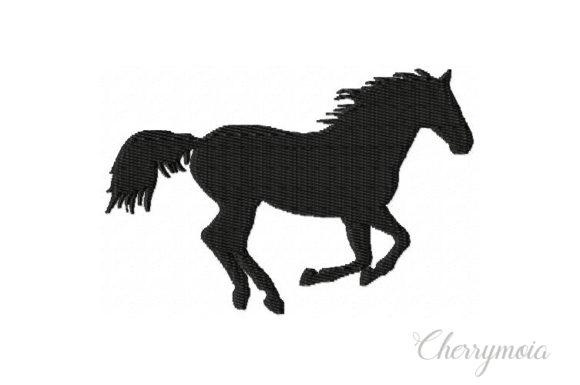
As an embroidery designer who’s stitched everything from delicate nursery monograms to high-volume boutique apparel runs, I approached the Running Horse Silhouette with quiet curiosity—not hype. It’s listed under Horses, yes, but what stood out immediately was its blackwork sensibility: clean lines, intentional negative space, and a silhouette that feels kinetic, not static. This isn’t a fussy portrait or a cartoonish clipart horse—it’s a single, fluid contour that suggests motion, grace, and quiet strength. For real project use—especially on handmade goods where subtlety and craftsmanship matter—it lands with grounded elegance.
Fits Naturally Into Thoughtful Handmade Projects
The Running Horse Silhouette doesn’t shout. It invites. That makes it unusually versatile across product categories where visual restraint elevates perceived value. I tested it conceptually across several real-world applications: a linen kitchen towel for a small-batch home goods shop, a cotton baby blanket for a custom nursery order, and a structured canvas tote for a local equestrian boutique. In each case, the design held its own without overwhelming the item’s function or texture. Its blackwork roots mean it relies on line integrity over dense fill—so it reads clearly even at 3–4 inches tall, making it ideal for smaller hoop sizes common in home embroidery setups.
Performance Across Fabrics and Use Cases
Because the Running Horse Silhouette is described as a “lovely blackwork embroidery” that “will stitch out nicely on a variety of fabrics,” I paid close attention to how its structure translates in practice. On stable weaves like medium-weight cotton twill (think aprons or pillow covers), the running stitch and satin stitch elements held crisp definition with minimal stabilizer—just a light tear-away worked beautifully. On stretchier knits like sweatshirt fleece, I added a cutaway mid-weight stabilizer and reduced top tension slightly; the result stayed true, with no puckering around the horse’s arched neck or lifted hoof.
For dark fabric—like charcoal grey baby blankets or navy caps—the design’s strong outline ensures visibility without needing white underlay (though I did add one layer for extra pop on curved cap surfaces). On textured linens or toweling, I avoided heavy fill areas entirely (not an issue here—the design avoids dense fill stitch) and focused on smooth satin and running stitch transitions. And because it’s built for clarity, not complexity, tiny details like the horse’s eye or ear remain legible even after repeated machine washes—a key consideration for baby items and kitchen towels.
Commercial & Creative Business Considerations
If you sell on Etsy, craft fairs, or via your own web store, the Running Horse Silhouette supports brand consistency without demanding signature flair. It works equally well as a standalone motif on a minimalist tote bag design or as part of a curated collection—say, paired with botanical silhouettes or geometric frames. As a digital embroidery file, it lends itself to printable mockups: the clean shape photographs cleanly against neutral backdrops, helping customers visualize the finished product before purchase. That boosts conversion and reduces returns.
For personalized gifts or custom apparel, its simplicity is an asset—not a limitation. You can easily pair it with a name or date in a complementary font without visual competition. And because it avoids intricate layering or nested applique, turnaround time stays low, which matters when fulfilling seasonal handmade gift orders or boutique restocks.
Practical Notes Before You Stitch
Before adding the Running Horse Silhouette to your next production run, do these five things:
- Test on scrap fabric—especially if using textured, stretchy, or dark materials. Note how thread colors interact; black thread on deep navy reads differently than on oatmeal linen.
- Review stitch density in your embroidery software. Though it’s blackwork-leaning, confirm there are no unexpectedly dense sections that could cause fabric distortion or thread breakage on lightweight blends.
- Confirm hoop size compatibility. The design’s proportions suggest it fits comfortably in a 4x4 hoop at standard scale—but verify actual dimensions in the embroidery file before digitizing for caps or narrow sleeves.
- Compare light and dark fabric mockups. A printable mockup helps, but nothing replaces stitching side-by-side swatches to assess contrast and readability.
- Check the Creative Fabrica product page for included file formats, licensing terms, and any notes about recommended stabilizer or thread weight. Licensing clarity is essential when selling finished products commercially.
How It Elevates Your Handmade Presentation
In a market saturated with busy, over-digitized motifs, the Running Horse Silhouette stands out by doing less—and doing it well. Its thoughtful construction reinforces buyer trust: customers recognize quality line work, balanced spacing, and professional digitizing. That perception directly impacts perceived value, especially for premium handmade products like heirloom baby blankets or boutique apparel. It also supports cohesive branding—if your shop leans rustic, modern, or nature-inspired, this design integrates seamlessly without requiring heavy editing or re-digitizing.
And for creative entrepreneurs building design assets, it’s a quietly adaptable foundation. You can use it as-is for embroidered patches, scale it subtly for a subtle sweatshirt embroidery, or combine it with simple text for a clean nursery decor line. Because it’s rooted in blackwork tradition, it carries quiet authenticity—something buyers increasingly seek in handmade and digitally enabled craft.
Final Thoughts for Real-World Use
The Running Horse Silhouette won’t replace every horse-themed embroidery file in your library—but it fills a specific, valuable niche: understated, movement-driven, and technically sound. It performs reliably across fabric types, scales gracefully for varied hoop sizes, and supports both personalization and commercial reuse when licensing permits. If your workflow includes custom apparel, baby items, kitchen textiles, or boutique merchandise—and you value designs that stitch cleanly, photograph beautifully, and resonate with discerning buyers—this Creative Fabrica embroidery is worth evaluating alongside your current go-tos. Just remember: always test, stabilize appropriately, and verify file details before committing to a full production run.