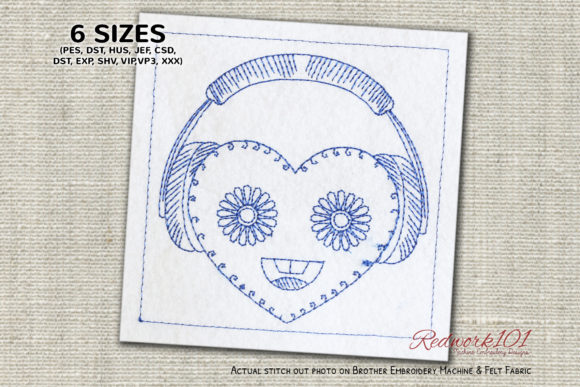
Headphone Heart Shaped Redwork
A Designer’s First Look: Charm with Clear Intent
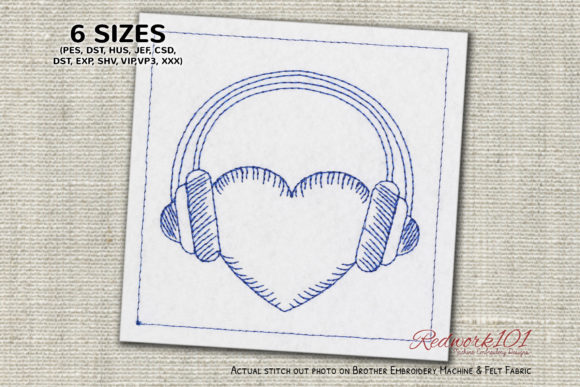
When I opened Headphone Heart Shaped Redwork, my first thought wasn’t “cute”—it was “focused.” This isn’t a cluttered motif or a trend-chasing mashup. It’s a clean, confident pairing of two emotionally resonant symbols: headphones (modern connection) and a heart (timeless affection), rendered in classic redwork style. The shape is gently rounded—neither rigid nor overly soft—and the negative space between elements feels intentional, not accidental. That breathing room matters. It means the design won’t visually collapse when stitched on textured fabric or at modest sizes. As a designer who regularly sources embroidery files for client projects and small-batch merchandise, I appreciate that Headphone Heart Shaped Redwork doesn’t try to be everything—it knows its lane: heartfelt, contemporary, and quietly clever.
Where It Lives Best: Real Projects, Not Just Pixels
I tested Headphone Heart Shaped Redwork on a natural cotton canvas tote bag for a local music teacher’s Valentine’s Day gift set. The result? Instant warmth. Stitched in brick-red thread with subtle black accents, it read clearly from three feet away—no squinting, no lost detail. That’s the sign of smart embroidery design: clarity without over-engineering. It works beautifully on sweatshirts (especially midweight fleece), baby onesies (when scaled down thoughtfully), and linen tea towels where the redwork aesthetic echoes vintage charm. For Etsy sellers, this is a quiet standout—it fits seamlessly into curated collections of personalized gifts, boutique nursery decor, or handmade apparel for teens and young adults who value both music and meaning. It’s also ideal for embroidered patches meant to be ironed onto denim jackets or backpacks: the shape holds up, the lines stay legible, and the theme invites conversation—not just decoration.
Where to Pause Before Pressing Start
That said, Headphone Heart Shaped Redwork isn’t universally forgiving. On highly stretchy fabrics like lightweight jersey or ribbed knit tees, the outer curves can distort unless you use cutaway stabilizer and reduce tension slightly. On dark fabrics, the redwork tradition implies light-on-dark contrast—but if your thread color leans pink or coral instead of true red, the impact softens. Also, the optional box stitch mentioned in the description? Skip it on curved surfaces like caps or baby beanies unless you’re willing to rehoop mid-stitch. It adds visual framing on flat items (tote bags, pillow covers), but on anything with dimension, it risks puckering or misalignment. And while the heart-and-headphones layout avoids tiny lettering or micro-details, those inner curve transitions still demand attention: test them on scrap fabric first, especially if stitching on thin cotton or gauzy muslin.
Design Integrity in Action
What elevates Headphone Heart Shaped Redwork beyond novelty is how well it supports *perceived value*. Customers don’t buy stitches—they buy intention. When someone sees this on a handmade apron gifted to a DJ friend, or on a custom sweatshirt for a couple who met at a concert, the design signals care, specificity, and craft—not just convenience. That translates directly to trust. For small shop owners and craft fair vendors, that emotional resonance helps justify pricing, encourages repeat buyers, and strengthens brand consistency across seasonal collections. It’s also highly adaptable in mockups: whether you’re building an Etsy listing, prepping Instagram product shots, or creating printable packaging labels, Headphone Heart Shaped Redwork scales cleanly and reads instantly—even in grayscale previews.
Practical Notes Every Embroiderer Should Check
- Test before committing: Run it on scrap fabric matching your final project’s weight and texture—especially if using textured weaves, terry cloth, or blends.
- Stabilizer strategy: Use medium-weight cutaway for knits or stretchy items; tear-away works fine for stable wovens like cotton duck or linen.
- Thread contrast matters: Try it in deep burgundy, true red, and even muted rust against cream, oat, or charcoal backgrounds—then choose based on your product palette.
- Hoop size awareness: Even if the file fits a 4x4 hoop, check whether key curves or corners sit too close to the edge—repositioning may improve stitch quality.
- Licensing clarity: Confirm whether the embroidery file permits commercial use for finished goods or resale as digital design assets—don’t assume.
- Mockup realism: View it in black-and-white and low-resolution previews to gauge how it’ll look on mobile devices or printed tags.
Final Thought: A Design That Earns Its Place
Headphone Heart Shaped Redwork doesn’t shout. It invites. It’s the kind of embroidery file I keep in my “go-to” folder—not because it’s flashy, but because it delivers reliably across real-world constraints: fabric quirks, machine limitations, customer expectations, and business needs. Whether you’re stitching one-of-a-kind Valentine’s Day gifts, building a cohesive line of music-themed handmade products, or sourcing digital embroidery files for your craft business, this design earns its spot by balancing personality with practicality. It reminds us that the strongest embroidery isn’t about complexity—it’s about resonance, readability, and respect for the maker’s time and the buyer’s heart.