Dream Catcher Symbol Redwork
A Thoughtful First Impression for Boutique Apparel Designers
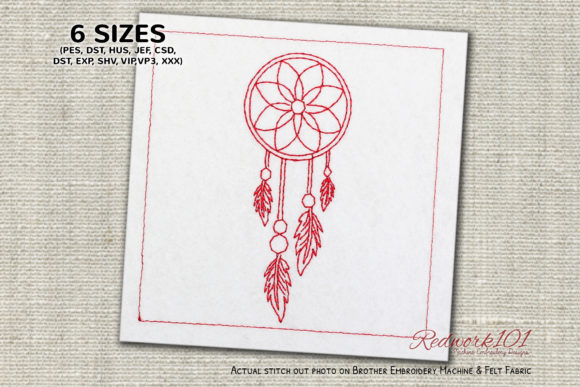
As an embroidery designer who’s developed collections for indie clothing brands and Etsy sellers for over a decade, I opened Dream Catcher Symbol Redwork expecting clean linework—and got exactly that. It reads as quiet but intentional: minimalist in silhouette, rich in symbolic resonance, and unmistakably hand-drawn in spirit. The redwork style gives it warmth and approachability—no heavy fills, no aggressive digitizing. It feels feminine without being saccharine, spiritual without leaning into cliché, and artisanal without sacrificing clarity at small scale. That balance is rare in religion-themed embroidery files—and essential when you’re stitching on premium sweatshirts or limited-run hoodies.
How It Performs Across Real Apparel Applications
Sweatshirt & hoodie chest placement: This design shines at 3–4 inches wide on the left chest of neutral heather gray or oatmeal sweatshirts. Its open structure avoids bulk, and the fine redwork lines hold crispness even on brushed fleece. On oversized hoodies, consider centering it just below the collarbone—it reads as intentional, not lost.
Sleeve accents & back designs: At 2.5 inches, it works beautifully on sleeve cuffs or upper-back placements. Because the outer box stitch is optional (as noted in the Creative Fabrica description), you can omit it entirely for a softer, more integrated look—ideal for lifestyle-focused brands aiming for subtle storytelling rather than bold graphics.
T-shirt embroidery & denim jackets: On lightweight cotton tees, use a light tear-away stabilizer and match thread tone closely to your garment color—especially on pastels or darks. On denim, the redwork contrast pops against indigo but stays grounded, avoiding “craft fair overload.” It’s versatile enough for unisex branding without leaning masculine or overly delicate.
Tote bags & seasonal layers: Stitched on canvas totes or cozy knit cardigans, Dream Catcher Symbol Redwork adds quiet intentionality. It doesn’t shout—it invites pause. That makes it perfect for slow-living brands, wellness apparel lines, or cottagecore-inspired collections where visual consistency matters more than trend-chasing.
Where to Use It Carefully—And Why
This isn’t a “set-and-forget” embroidery file. Its charm lies in its restraint—and that means thoughtful execution is non-negotiable. Avoid placing it directly over high-stretch seams (like side panels of fitted hoodies) unless you’ve tested stabilization thoroughly. Ribbed fabric? Yes—but only with cutaway stabilizer underneath and reduced top tension to prevent puckering around the web-like center motif.
On curved surfaces—think rounded yokes or tapered sleeves—hoop the fabric flat first, then gently ease it into position. Don’t force the design onto a bend; instead, adjust placement so the symbol sits on the flattest possible area. And if you’re pairing it with tiny lettering (e.g., a micro-brand tag beneath), test spacing on scrap first—the open negative space around the dream catcher needs breathing room.
Impact on Brand Identity & Customer Perception
For small shops and handmade product creators, every stitch contributes to perceived value. Dream Catcher Symbol Redwork elevates a basic sweatshirt from “casual wear” to “curated piece”—not through flash, but through resonance. Buyers recognize intentionality: the choice of redwork signals craftsmanship; the dream catcher motif suggests care, protection, mindfulness. That quietly reinforces trust, especially for Etsy sellers or boutique brands building community around shared values.
It also supports visual consistency across product lines. Pair it with soft neutrals, natural fibers, and muted thread palettes—and suddenly your entire collection feels cohesive, even without matching logos. That cohesion translates directly to stronger social media graphics, cleaner printable mockups, and more confident customer engagement.
Practical Designer Notes Before You Stitch
- Always test on scrap fabric—especially if using stretchy fleece or textured French terry. Note how the outer box stitch behaves (it’s optional, per Creative Fabrica’s note) and whether skipping it improves drape.
- Review stabilizer choice carefully. Light tear-away works for stable cottons; cutaway is safer for knits and fleece. For dark garments, test thread contrast—redwork doesn’t require red thread; charcoal-gray or deep rust often reads richer.
- Confirm hoop size and stitch density before scaling. While the design appears open, dense areas (like the central web or feather tips) may compress unexpectedly at larger sizes—check the actual embroidery file preview on Creative Fabrica.
- Test on your exact garment fabric—not just a similar one. A 100% cotton hoodie behaves differently than a poly-cotton blend, and thread pull can vary dramatically.
- Compare placement options visually. Try it centered, off-center, and rotated slightly (5–7 degrees) on a digital mockup—subtle shifts change the whole mood.
- Verify licensing details before selling finished apparel. Creative Fabrica’s terms for this embroidery file should clarify commercial use rights—don’t assume.
Final Thoughts for Creative Entrepreneurs
Dream Catcher Symbol Redwork isn’t flashy—but it’s deeply functional for designers who understand that meaning lives in subtlety. It fits naturally within a boutique brand’s visual language without demanding attention. It supports storytelling without spelling it out. And because it’s rooted in redwork tradition—not fast-digital trends—it ages gracefully across seasons and collections.
If you’re curating a small batch of custom apparel, launching a mindful lifestyle line, or building a recognizable identity for your Etsy shop, this Creative Fabrica embroidery file earns its place in your library. Not as a novelty, but as a quiet anchor—thoughtful, stitch-perfect, and ready to translate intention into wearable art.