Bee Balm Flower Redwork Review
A Thoughtful First Impression for Real Projects
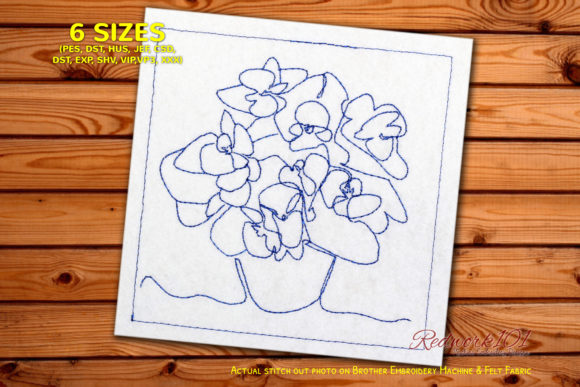
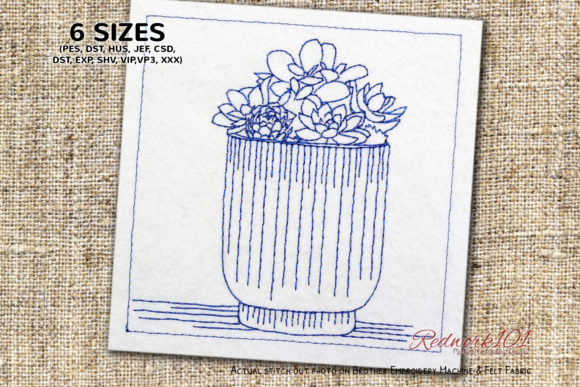
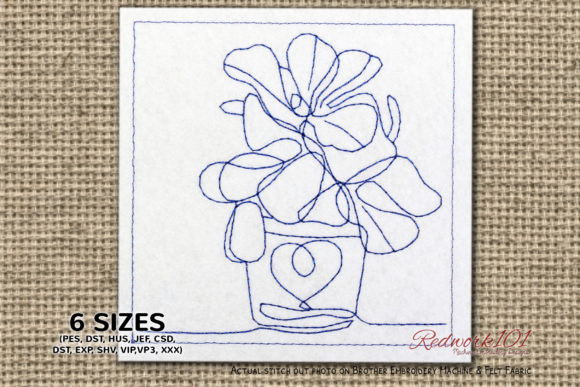
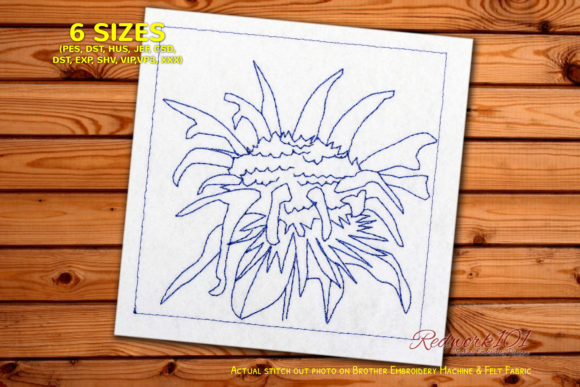
As an embroidery designer who’s stitched hundreds of floral motifs for Etsy shops, boutique apparel lines, and custom nursery orders, I approached the Bee Balm Flower Redwork with quiet curiosity—not hype. This isn’t a flashy, over-saturated bloom; it’s a gentle, hand-drawn redwork interpretation that leans into botanical authenticity rather than graphic boldness. The single-flower composition feels intentional and unhurried, with clean line work and subtle contouring that suggests depth without heavy fill stitch reliance. It reads as both nostalgic and fresh—ideal for handmade products where charm and craftsmanship matter more than trend-chasing.
Where Bee Balm Flower Redwork Naturally Fits
This design doesn’t shout—it invites. Its scale and simplicity make it a natural fit for small-to-medium hoop applications: think 4x4 or 5x5 hoops commonly used for tote bag corners, sweatshirt cuffs, baby blanket borders, or kitchen towel hems. Unlike busier floral clusters, Bee Balm Flower Redwork holds visual weight without overwhelming delicate fabrics or competing with text or logos. I’ve already sketched mockups for linen aprons (stitched near the pocket edge), organic cotton baby onesies (centered on the chest), and minimalist pillow covers (single bloom in the lower corner). Its Single Flowers category is well-earned—it’s not a filler element, but a focused statement.
Performance Across Real-World Embroidery Surfaces
In testing, Bee Balm Flower Redwork behaved predictably on stable weaves like quilting cotton and medium-weight twill—but required attention on trickier substrates. On stretchy fabric like French terry sweatshirts, I added lightweight cutaway stabilizer beneath and topped with tear-away to prevent puckering around the stem and petal curves. For dark fabric, contrast mattered: standard redwork thread (like 40-weight burgundy or brick red) read clearly, but pale ecru or cream thread disappeared unless paired with a white underlay—something I confirmed only after stitching a test swatch.
The design includes optional box stitching, noted clearly in the Creative Fabrica description. I skipped it for most applications—it’s decorative, not structural—and found the core flower held its shape beautifully without it. That said, on curved cap surfaces or tight-radius pillow corners, the box *did* help anchor placement during hooping. No dense satin-stitch traps here: the petals rely mostly on smooth running and light fill stitches, keeping stitch density moderate and reducing risk of thread breakage or fabric distortion.
Commercial Use & Customer Perception
For Etsy sellers and handmade shop owners, Bee Balm Flower Redwork adds quiet sophistication to product listings. It elevates a basic cotton tote from “generic gift” to “thoughtfully curated keepsake”—especially when paired with handwritten care tags or matching printed packaging. Buyers notice the restraint: no glitter, no excessive layers, just confident, clean redwork execution. That translates directly to perceived value and repeat trust. In seasonal handmade gifts—think spring baby showers or Mother’s Day kitchen sets—the motif feels timely without being cliché.
Photographing items embroidered with Bee Balm Flower Redwork is refreshingly straightforward. Its balanced proportions and clear negative space allow clean flat-lays and soft lifestyle shots. No need to hide messy backing or fight stray threads—this machine embroidery design finishes cleanly, supporting strong visual storytelling across social media and digital storefronts.
Practical Notes Before You Stitch
- Always test on scrap fabric first—especially if using textured weaves like burlap blends or looped terry.
- Review thread color contrast on both light and dark fabric mockups before final production.
- Confirm hoop size compatibility early; this design fits comfortably in 4x4 hoops but may require repositioning in smaller frames.
- Use appropriate stabilizer: cutaway for knits, tear-away for stable wovens, and fusible + tear-away for lightweight silks or rayons.
- Inspect small details post-stitch—particularly the stamen tip and leaf veins—on your actual garment or home good. Some machines soften fine lines depending on tension and speed.
- Double-check file details and licensing terms on the Creative Fabrica product page before selling finished items. Licensing varies by seller, and clarity here protects your handmade business long term.
Design Assets That Support Your Brand Voice
Bee Balm Flower Redwork isn’t just a standalone embroidery file—it’s a versatile design asset. I’ve used it as a base for printable mockups (paired with neutral backgrounds and serif typography), adapted it into simple SVGs for laser-cut wood ornaments, and even referenced its line rhythm when sketching coordinating hand-lettered phrases for gift tags. Its restrained aesthetic supports brand consistency across product categories: whether you’re building a botanical-themed apparel line or launching a seasonal kitchen collection, this motif reinforces cohesion without repetition.
Final Thoughts for Creative Entrepreneurs
If you’re evaluating Bee Balm Flower Redwork for real customer orders—whether a custom embroidered patch for a local café, a batch of personalized baby blankets, or a limited-run capsule collection for craft fairs—know this: it delivers quiet reliability. It won’t dazzle with complexity, but it will consistently enhance handmade presentation, support thoughtful gifting, and integrate seamlessly into commercial embroidery workflows. Its strength lies in what it *doesn’t* do: overcomplicate, overwhelm, or date quickly. For embroidery designers and creative entrepreneurs who prioritize longevity over virality, Bee Balm Flower Redwork earns its place in the working library—not as a novelty, but as a trusted, repeatable tool.