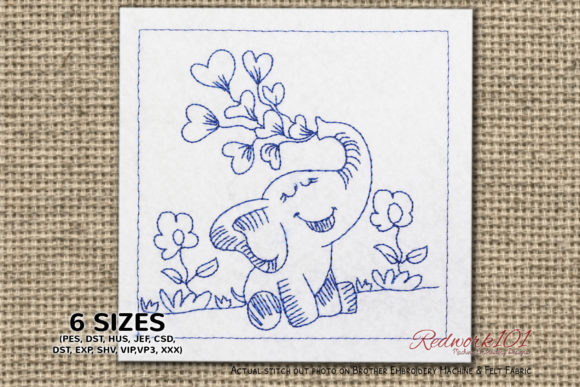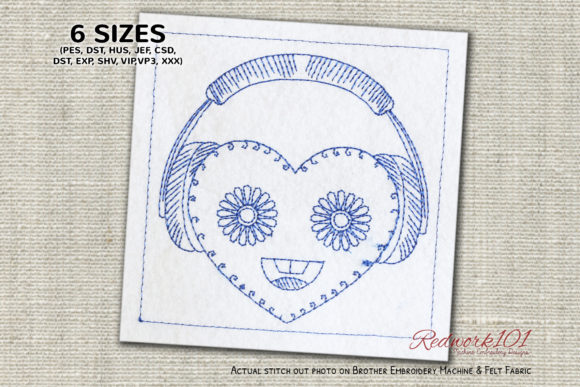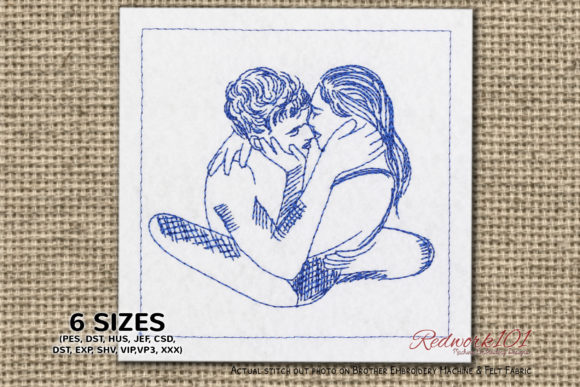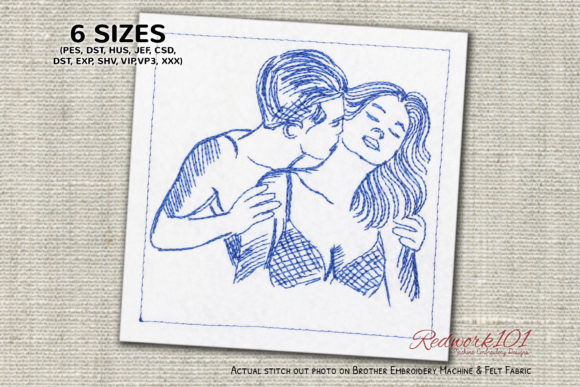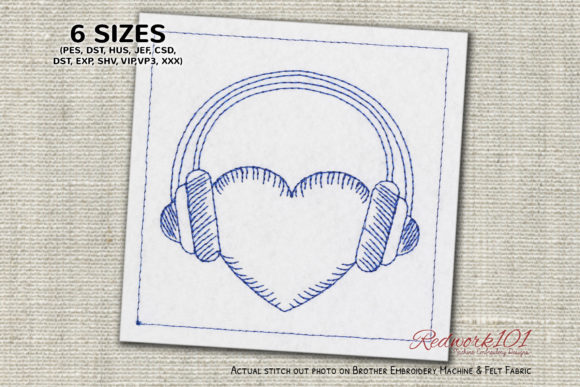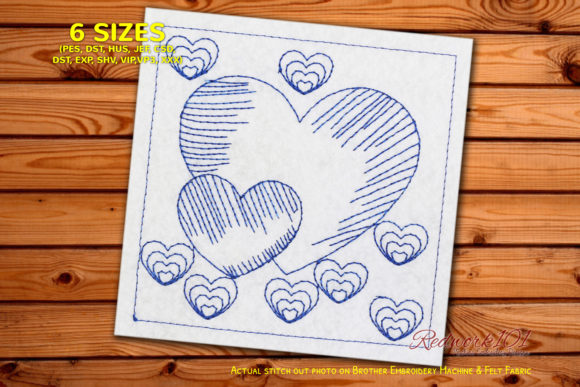
All Hearts Redwork Design
A Practical Review for Small Business Merchandise & Branded Patches
As an embroidery designer who’s digitized and stitched thousands of logos for cafés, boutiques, bakeries, florists, pet brands, and handmade studios, I approach every new machine embroidery design with two questions: Will it hold up in real-world production? and Does it strengthen brand identity—not just decorate? That’s why I took All Hearts Redwork Design straight to the hoop, not the mood board. This isn’t just a Valentine S Day motif—it’s a functional, scalable asset for small business merch.
First Impression: Handmade Charm Meets Commercial Clarity
“All Hearts Redwork” signals tradition—clean lines, bold outlines, and that unmistakable redwork simplicity where negative space does as much work as thread. It reads as friendly, confident, and quietly premium—not cutesy or cluttered. The optional Box Stitch (mentioned in the description) adds subtle structure without rigidity, letting you frame the heart motif or skip it entirely for a more organic, hand-stitched feel. That flexibility is gold for businesses balancing authenticity with polish—think a local florist’s apron versus a boutique’s limited-edition tote bag.
Where It Shines in Real Business Use
- Embroidered patches: All Hearts Redwork Design translates beautifully to woven or embroidered patches. Its open shapes and moderate stitch density prevent stiffness, making it ideal for iron-on or sew-on patches on jackets, backpacks, or staff uniforms.
- Staff uniforms & aprons: On chef coats, barista aprons, or florist smocks, this design reads clearly at chest or sleeve placement—even from 6 feet away. Its centered composition and balanced proportions avoid visual competition with pockets or seams.
- Cap embroidery: When sized correctly (typically 2–2.5" wide), All Hearts Redwork Design holds definition on curved front panels. Skip the Box Stitch for caps if minimizing bulk; the heart alone carries strong recognition.
- Tote bag design & product packaging accents: As a subtle corner mark or center-front emblem on cotton totes or kraft gift tags, it reinforces handmade product positioning without overwhelming the item’s utility or texture.
- Etsy branding & craft business assets: Paired with a clean sans-serif shop name, All Hearts Redwork Design becomes part of a cohesive visual language—ideal for printable mockups, digital lookbooks, and social media banners that signal craft integrity.
Where to Use It Thoughtfully
Like any well-intentioned design, All Hearts Redwork Design has boundaries—and respecting them ensures your finished product reflects professionalism, not compromise.
- Avoid sub-1.5" patch sizes unless you’ve tested it first—the inner heart detail may blur on dense fabrics or low-thread-count stabilizers.
- Curved surfaces like cap fronts or rounded mugs demand careful hooping and tension checks; always test on scrap fabric with the same curve radius.
- Dark uniforms or textured fabric (like heavy canvas or terry cloth) require high-contrast thread colors—test red against navy, charcoal, or olive before full runs.
- Frequent washing or heavy wear items benefit from reinforced backing and quality stabilizer—don’t rely on default settings. Redwork’s open areas need support to prevent puckering over time.
How It Builds Brand Identity—Beyond the Heart
Small business owners often underestimate how much a single embroidery file contributes to perceived value. All Hearts Redwork Design doesn’t scream “Valentine S Day”—it whispers “carefully made.” That nuance builds trust: customers associate its clean execution with attention to detail, consistency, and intentionality. When stitched on a bakery’s linen apron or a pet brand’s bandana, it subtly signals craftsmanship—not just commerce. Visually, it pairs effortlessly with neutral palettes, handwritten typography, or minimalist packaging, helping maintain visual consistency across touchpoints—from in-store signage to Instagram stories.
Practical Embroidery Designer Notes for Your Production Workflow
- Test in black and white first—verify contrast and legibility before committing to thread colors.
- Check small patch performance at 1.75" width on your target fabric + stabilizer combo.
- Review thread color contrast carefully—especially if using non-red thread options. A deep burgundy on cream linen reads differently than cherry red on black denim.
- Inspect spacing between elements; tight gaps can close up on stretchy or loosely woven fabrics.
- Confirm hoop size compatibility with your commercial embroidery machines—some versions may require larger hoops depending on Box Stitch inclusion.
- Always test on real fabric, not just stabilizer—fabric texture changes stitch lay and density perception.
- Use appropriate stabilizer: cutaway for knits, tear-away for stable wovens, and fusible for lightweight linens.
- Create a client-approved printable mockup—show how All Hearts Redwork Design scales across cap, tote, and apron applications.
- Compare it beside existing design assets—does it harmonize with your logo, font system, and color palette? Consistency multiplies impact.
- Confirm commercial licensing before mass production—this is a digital embroidery file intended for business use, but verify usage rights directly with the source.
All Hearts Redwork Design earns its place in your embroidery library not because it’s seasonal, but because it’s strategic. It works equally well as a quiet signature on a ceramic studio’s packaging label or a vibrant accent on a children’s boutique’s custom apparel line. For small business owners and embroidery shops alike, it’s proof that thoughtful redwork isn’t just decorative—it’s a durable, recognizable, and deeply human element of brand storytelling.