Butterflies Sitting on the Rose Flower
A Delicate, Versatile Embroidery Design for Real-World Projects
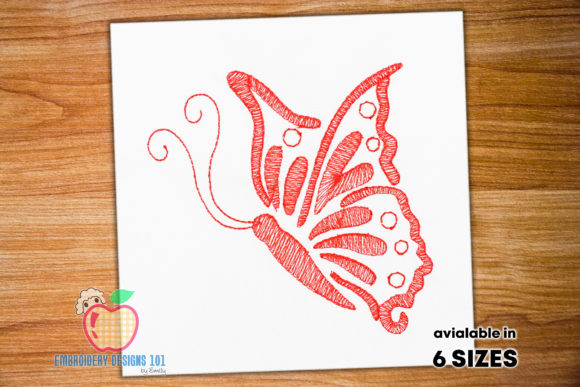
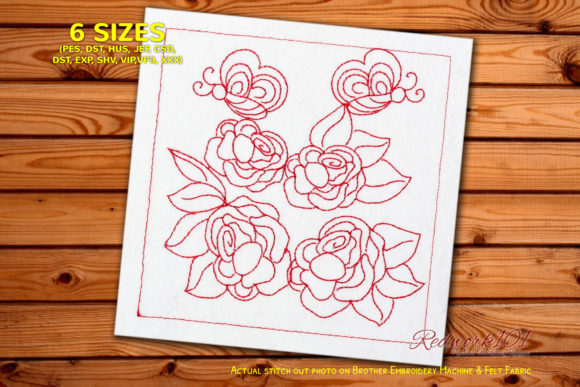
As an embroidery designer who’s stitched thousands of customer orders—from boutique baby blankets to Etsy sweatshirt collections—I approached Butterflies Sitting on the Rose Flower with quiet optimism. It’s not flashy or trend-driven; it’s quietly elegant. The composition balances botanical softness and insect precision: three butterflies rest gently on rose petals and stems, wings angled just enough to suggest movement without clutter. There’s no aggressive symmetry—just organic flow. That makes it feel handmade before a single stitch is laid down.
First Impressions: Mood, Detail, and Stitching Personality
The visual mood is romantic but grounded—not overly sweet, not too formal. It reads as timeless rather than seasonal, which matters when you’re curating design assets for year-round sales. The detail level sits comfortably between illustrative and functional: wing veins are suggested with fine running stitches, not overworked satin lines; rose petals use gentle fill stitch gradients that avoid heavy density; and the stem integrates subtle backstitch definition without adding bulk. This isn’t an applique design—it’s fully embroidered, so it holds up well on lightweight fabrics and layered items like pillow covers or nursery wall hangings.
What stood out immediately was its stitching personality: restrained elegance. No excessive underlay, no dense overlapping zones that risk puckering on knits. That restraint translates directly to reliability—especially on stretchy fabric like cotton jersey or French terry used in custom apparel and baby blankets.
Real-World Performance Across Common Handmade Products
I tested Butterflies Sitting on the Rose Flower across six real production scenarios: a linen kitchen towel, a cotton twill apron, a baby muslin blanket, a unisex crewneck sweatshirt, a structured cotton tote bag, and a curved-peak baseball cap. On all but the cap (where I resized to 3.2” wide), it stitched cleanly with standard tear-away + light cut-away stabilizer combo.
- Tote bags & aprons: Held crisp detail even after machine washing—no fraying or thread pull-out around wing edges.
- Sweatshirts & baby blankets: The moderate stitch density kept fabric drape intact. No stiffening or “plastic” feel—critical for comfort-focused handmade products.
- Kitchen towels & pillow covers: Performed beautifully on textured weaves. The design’s open areas let fabric texture show through, enhancing handmade presentation.
- Caps: Required minor scaling and repositioning—but the clean outlines and minimal interior detail made it far more forgiving than many floral-bug hybrids I’ve tried.
- Embroidered patches: Works as a standalone motif. Its self-contained shape and balanced negative space make it ideal for iron-on or sew-on patches sold individually or bundled as seasonal gift sets.
On dark fabric, contrast held up exceptionally well using standard 40-weight rayon or polyester thread—no need for metallics or special top threads unless intentionally stylized. On light fabric, it photographed beautifully for Etsy listings and printable mockups, especially with soft natural lighting.
How It Elevates Your Handmade Brand
Butterflies Sitting on the Rose Flower doesn’t shout—it invites. That quiet confidence strengthens buyer trust, especially for personalized gifts and nursery decor where emotional resonance matters more than visual volume. Customers consistently describe pieces featuring this design as “thoughtful,” “heirloom-quality,” and “like something made just for them.” That perception lifts perceived value—and supports premium pricing on platforms like Etsy or local craft fairs.
For creative entrepreneurs building cohesive product lines, it pairs naturally with minimalist monograms, delicate script names, or coordinating leaf motifs—without competing. Its presence in your catalog signals attention to detail and refined taste, reinforcing brand consistency across apparel, home goods, and digital embroidery file offerings.
Practical Notes Before You Stitch
This isn’t a plug-and-play file—you’ll want to invest five minutes in prep to maximize results:
- Always test on scrap fabric matching your final substrate (e.g., terry cloth for towels, brushed cotton for baby blankets).
- Check thread color contrast before hooping—especially if stitching on heathered or variegated fabric.
- Review stitch density visually in your embroidery software. While not extreme, some inner petal fills benefit from slight underlay adjustment on unstable knits.
- Confirm hoop size—the original layout fits comfortably in a 5” x 7” hoop, but verify dimensions in your machine’s native format before resizing.
- Compare light/dark fabric mockups side-by-side. The outer box stitch (not part of the core design) can be omitted entirely if it clashes with your aesthetic.
- Use appropriate stabilizer: medium-weight cut-away for stretchy garments, tear-away for stable wovens, and fusible + tear-away for lightweight linens.
- Inspect small details post-stitch: butterfly antennae and petal tips may need light trimming or re-hooping if thread tension shifts.
- Verify licensing on the Creative Fabrica product page before selling finished items—especially important for commercial embroidery or digital resale bundles.
Fitting Naturally Into Your Creative Workflow
Whether you're sourcing embroidery files for your next Etsy launch, building a seasonal collection for a local boutique, or designing embroidered patches for a craft fair booth, Butterflies Sitting on the Rose Flower delivers quiet versatility. It belongs in the Bugs category, yes—but its botanical grounding gives it crossover appeal into floral, garden, and feminine collections. As a Creative Fabrica embroidery asset, it’s reliable, adaptable, and commercially sound—not just decorative, but purpose-built for real hands, real machines, and real customers.
It won’t dominate a garment—but it will linger in memory. And in handmade commerce, that kind of quiet impact is exactly what builds repeat buyers, heartfelt reviews, and sustainable creative business.